"The city of Washington was built on a stagnant swamp some 200 years ago and very little has changed; it stank then and it stinks now.

Only today, it is the fetid stench of corruption that hangs in the air!"

Lisa Simpson's "Cesspool on the Potomac" (Sep. 26, 1991)

Saturday, December 27, 2008

Season's Greetings from the IDF!

Upon unleashing a deadly wave of airstrikes on the Gaza Strip in its biggest operation in the region since the 1967 Arab-Israeli War, the Jewish state's Defense Minister Ehud Barak declared ominously: "Now is the time for fighting." The Israeli action, which may soon be expanded to involve ground troops, is being justified as a response to rocket attacks launched by Hamas-affiliated Palestinian militants from Gaza into southern Israel. Whatever the rationale, this is yet another case of Israel's commitment to using violence as its primary means of political negotiation. Surely, there are some unsavory characters who lurk in the shadows of Gaza's slums waiting to kill innocent Israelis in order to inflict pain on their enemy. Yet none of these rocket attacks can compare in magnitude to the fury of the Israeli Defense Force's firepower which has so far killed at least 200 Palestinians over the course of a few hours. The international community, while calling for Hamas to halt its rocket attacks, is outraged by Israel's latest attempt to prove that "might makes right."

The timing of these airstrikes is also rather suspicious, as one gets the sense that leaders in Israel are uncertain about Obama's agenda for the Middle East--despite how much he tries to reassure AIPAC--and are thus now scrambling to achieve their military objectives in the region before the official end of the Bush-Cheney era. There are also upcoming elections in Israel, and this latest round of violence would appear to play right into the hands of Benjamin Netanyahu, the hard line Likud leader whose racially-tinged hawkishness towards the Arab world is both well-known and (to many observers) very frightening. If Netanyahu returns to the Prime Minister's office after the next round of voting on Feb. 10 2009, there will be virtually no doubt in which direction Israeli policy will be headed. Thus while it appears that Israel has failed in its mission to cajole the lame-duck Republican administration into starting one more war in the Middle East before riding off into the sunset, today's events indicate that leaders in Tel Aviv may be willing to follow Bush's lead and "go it alone." Thus with Gaza in flames and the world up-in-arms, it might be worth asking what seems in some ways like a ludicrous question: will Iran be next?

CLIMATE CHANGE WE CAN BELIEVE IN

GREEN ALERT

SURELY
there is no cause ultimately greater than preserving the sustainability life on earth, preferably including humans; with every passing moment it is increasingly obvious that our planet is becoming less stable/familiar, and it is clear that we must change our ways of life accordingly. From powerful storms and flooding to droughts and lightening-sparked wildfires, the signs of a climate in transition are all around us.

As most people are by now aware, former Vice-President Al Gore has, in the wake of being denied the White House in 2000, been engaged in a campaign to fight against global climate change. His Oscar-winning 2006 documentary An Inconvenient Truth gained widespread attention and helped lead to Gore's selection in October 2007 as a recipient of the Nobel Prize for his work publicizing the "climate crisis." As someone who until recently had far more credibility in Washington than among activists, Gore may be a highly imperfect messenger for the environmental movement. Then again, he is neither an environmentalist nor a scientific "expert," but a politician who converted himself into a developer of mass environmental awareness while appealing to national and world leaders through such initiatives as wecansolveit.org.

On July 17, 2008 Gore delivered a speech at Constitution Hall in Washington, followed that Sunday with an appearance on Meet the Press, in which he put forth a challenge to the nation: shift to one hundred percent renewable (wind, solar, and other carbon-free) sources of energy by 2018. While gaining broad public and political support, there were also those who questioned whether Gore's 10-year plan was feasible while wondering how it would be funded, especially under current circumstances. In addressing this issue with Tom Brokaw, Gore spoke of needing to"tax what we burn, not what we earn." There is no reason why industry should not pay what amounts to a fine for polluting the atmosphere and contributing to the instability of the climate. Yet in order to raise the immense amount of money necessary to rebuild the national energy infrastructure, those in the highest income bracket--$250, 000 per year and up--will inevitably have to pay a significantly higher percentage of their salary in taxes (as they should).

The question of how to fund such initiatives is especially important since it relates to the idea of ultimately repairing a severely damaged economic system by creating "green collar" jobs that put people back to work installing solar panels and building high-speed railways, for instance. Through its various pronouncements about job creation and infrastructure repair programs, along with a stated commitment to urgent action on the issue of climate change, the incoming Obama administration seems poised to move in the direction of such a Green Deal. Obama's choice of California Rep. Hilda Solis as the next Secretary of Labor would seem to confirm this conclusion (Solis is considered a pro-labor, "green jobs" expert), as would his recent meeting with Gore in Chicago (while it is at the moment unlikely that he would accept the position, there has been speculation that Team Obama has offered to give Gore an official Cabinet post as Climate Change Czar).

In a recent article,
"Why Obama's Futurama Can Wait: Schools and Hospitals Should Come First in Any Stimulus Package," historian Mike Davis takes issue with Obama's stated priorities:
We are now at a crash site, and our priority should be to save the victims, not change the tires or repair the fender, much less build a new car. In the triage situation that now confronts the president-elect, keeping local schools and hospitals open should be the first concern, rebuilding bridges and expanding ports would come next, and rescuing bank shareholders at the very end of the line.
Davis' reference to the current Bush administration-engineered $700 billion "financial rescue package" is quite prescient, as no serious attempt to fix the economic meltdown can be successful if it begins be rewarding those who created the disaster to begin with. Beyond this, his argument is essentially that rebuilding the nation's infrastructure must take a back-seat to what he considers to be more humanitarian concerns: education and health care. Yet Davis does not fully explain why it makes sense to separate an immediate investment in schools and hospitals from a massive Green Deal-like socioeconomic program, especially since a growing green-collar job sector, along with higher taxes for the rich, would help fund the social services he thinks must be prioritized.

While not fully articulated, Davis' underlying premise is that a Green Deal might be utilized by elites to shore-up the system much like the New Deal is credited with having "saved capitalism." Progressive activists should therefore be wary of capital-intensive infrastructure development programs that do not offer immediate assistance to those being victimized by the economic crisis. This is an honorable sentiment indeed, yet it fails to consider the degree to which providing work for the jobless and preventing deaths as a result of collapsed bridges can be viewed as a humanitarian matter. Yet much more striking, given the particular focus of his work, is Davis' failure to clearly delineate how climate change should (or for that matter should not) be addressed in terms of socioeconomic policy.

He seems to be arguing--or at least implying--that climate change is not as serious a problem as many alarmists would have us believe, and that it fits the pattern of capitalism's tendency to cause environmental catastrophes that are subsequently manufactured into "natural disasters" easily exploited by those in power (See Davis' Late Victorian Holocausts: El NiƱo Famines and the Making of the Third World). Still, Davis comes nowhere close to claiming that the global climate crisis is ultimately unreal or even unduly exaggerated. Indeed, the question of ongoing environmental devastation caused by human activity does not factor much at all into his pithy criticism of "Obama's Futurama." Instead, Davis refers to the incoming president's economic team as a "powerful and desperate coalition of interests...aligned to support the Keynesian shock-and-awe of major public works," but he does not characterize such elite support for government spending as in any way related to environmental policies.

So even assuming that a Green Deal would ultimately amount to another attempt to save the capitalist ship before it sinks, it's difficult to make a strong case for that outcome being worse than what may happen if we don't do anything (or at least not enough) to address the climate crisis. Maybe this sentiment is attached to the fact that many leftists today--unlike during previous eras--have an easier time imagining the end of the world than they do imagining the end of capitalism. Perhaps Mike Davis is thus simply staying true to his Marxist roots by choosing to focus on socioeconomic conditions rather than fret over the decreasing size of the earth's polar ice caps.

Yet it seems logical that environmental and economic reforms should from now on be increasingly integrated in some context, whether it be a Green Deal or in another manner. Indeed, even military planners are very seriously examining the potential threats posed by climate change and preparing "national security" strategies accordingly. For instance a Pentagon commissioned study published in October 2003 and released to the public in February 2004, "An Abrupt Climate Change Scenario and its Implications for United States National Security", warned that
Violence and disruption stemming from the stresses created by abrupt changes in the climate pose a different type of threat to national security than we are accustomed to today. Military confrontation may be triggered by a desperate need for natural resources such as energy, food and water rather than by conflicts over ideology, religion, or national honor.
By this account there is no telling exactly how the global political-economy will be affected by the climate crisis, and it could under the right conditions produce unprecedented levels of migration accompanying a frightening wave of "resource wars" that would make the invasion and occupation of Iraq seem quaint. Especially in this light: though not perfect, a Green Deal that would seek to divert money away from the military-industrial complex and send it towards a broad array of domestic necessities might be the wisest course of action to follow at this critical juncture.

Tuesday, December 23, 2008

Keep Your Eyes on Sasha: The Littlest Obama Will Bring Real Change to the White House

A descendant of slaves, seven year-old Natasha (Sasha) Obama will soon be the youngest person to move into the White House since John F. Kennedy Jr. in 1961. And while she will not be in Cabinet meetings or receive "national-security" briefings, she does have the ear of the President (not to mention a lock on his heart). But more importantly, Sasha is an uncorrupted child who is just coming into consciousness and in whose eyes one can still see the glimmering magic of youth. While moving into the White House will surely change her, she--with her vibrancy and innocence--will surely also change the White House. Perhaps the ghost of Sally Hemmings will even find some rest.

Seen here (thanks to a paparazzo) sporting what admirers are calling "sassy vacation sunglasses" as she deplaned yesterday in Hawaii with her father in tow, less visible but more revealing is her multicolored peace sign t-shirt. On one level Sasha's fashion underscores the unfortunate fact that the 1960s counterculture and its symbols have become highly marketable and heavily marketed commodities. Yet this troubling development aside (although it should be examined and discussed in general), there is something fortuitously luminous about seeing the strong, black, and beautiful daughter of our new JFK/MLK hybrid president strutting her stuff in a sparkling peace sign without a care in the world (granted, no one was supposed to see this image...!?). If symbols matter, and they do, Sasha's a wonderful symbol for what the next generation of influential Americans may look like.

Sunday, December 14, 2008

Don't Let the Shoe Hit You on the Way Out!

An Iraqi reporter hurls a shoe at Bush during his final visit to the country that the 43 US president chose to unilaterally invade and occupy. Said the man: "This is a goodbye kiss, you dog!"

Given the structure of international law, after Jan. 20, Bush may have much more than just flying footwear to be concerned about...


Friday, December 12, 2008

SAY IT LOUD: I'M GREEN AND I'M PROUD!

"I inhaled frequently. That was the point."
--Barack Obama, Nov. 2006

IF the Green Revolution is truly upon us, then nothing short of full decriminalization AND rationally implemented legalization of cannabis must be central to the "change we seek." Now is the time to begin a massive campaign geared towards pressuring (gently or more forcefully) President Obama and his minions to move beyond the insane folly of America's "controlled substances" policies--the tragedy of which is exemplified by a longstanding federal anti-marijuana bias that harms far more people than the outlawed plant itself ever has in its centuries of existence. Indeed, cannabis has numerous proven benefits, from its use as medicine for chronically ill patients to sustainable industrial/agricultural product, not to mention as a globally popular recreational drug used widely as a non-toxic alternative to alcohol as well as a mild (sacramental) psychoactive agent.

For reasons neither completely known nor relevant, 4:20 as a time and 4/20 as a date have become known internationally as symbols of cannabis culture, the latter marking a recognized annual day of celebration. Yet, April 20 is at this point an apolitical event that may in balance harm more than help the serious and important work of cannabis advocacy. All of this much change. April 20, 2009 ought to be a day when people of conscience across the world come together to call for an end to the "War on Drugs" by echoing the reggae prophet Peter Tosh's simple yet profound demand: "Legalize it!"

Thursday, November 6, 2008

After Bush: A Center-Left Obama Coalition?

In 2004 after Bush and Cheney “won” another bitterly divided and contested election, Karl Rove heralded the dawning of a new "permanent Republican majority" driven by commitment to conservative cultural values at home and unwavering militarism abroad. Evangelical Christians in the American heartland along with suburban “soccer moms” (or what Sarah Palin calls “hockey moms”) were supposed to constitute the foot soldiers of Rove’s movement, which, in practice, was an extension of the “Reagan Revolution.” This Republican coalition was obviously not as strong as its leaders liked to suggest, and there is no doubt that the recent unpopularity of the Bush-Cheney regime contributed greatly to the GOP’s dramatically sudden demise (and certainly the ineffectual McCain-Palin campaign did not help the conservative cause, nor did the timing of the current financial crisis). Yet in the wake of losing the 2004 elections and facing four more years of Republican control in the White House and Congress, there was a concerted, and it now appears highly successful counter-movement launched by progressives who strategically chose to work with, if not from within, the Democratic Party.

The origins of this center/left coalition date most immediately to Howard Dean’s 2004 primary campaign during which he lost the nomination to John Kerry, but attracted media attention for having produced a largely youth-based, internet-run campaign that called for ending the Iraq War and drawing national focus towards such issues as health care, education, and energy reform. Not nearly as radical as the platforms of progressives like Nader or Dennis Kucinich, Dean’s ideas caught-on within mainstream liberal circles for this exact reason. As such, the Dean approach became a viable third-way between excessive compromise and excessive purism. This was at least the perspective of groups like MoveOn.org, which generated a great deal of grassroots enthusiasm for Dean’s campaign in large part as a refocusing of antiwar activity that had tried and failed in March 2003 to affect a change in policy by staging massive 1960s-style street demonstrations against the invasion of Iraq.
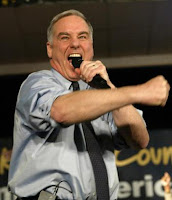
The Dean campaign offered a bottom-up organizing and fund-raising model that became a potent antidote to Karl Rove’s political machinery. Especially in the wake of their 2004 electoral defeat, activist Democrats in groups like MoveOn and Daily Kos (founded in 2002) redoubled their efforts to promote liberal and progressive media outlets while developing and strengthening new left-leaning think-tanks and policy groups designed to refurbish the infrastructure of Democratic electoral politics. For instance in 2003 former Clinton chief of staff John Podesta founded the Center for American Progress (CAP) as a means of directly countering the influence exercised by conservative groups like the Heritage Foundation and the American Enterprise Institute (AEI). Dean, meanwhile, became chairman of the Democratic National Committee (DNC) in 2005 and began pursuing a “fifty-state strategy” designed after the goals of his presidential campaign. Dean’s party leadership produced the opening salvo of the GOP’s demise during the 2006 mid-term elections, when Democrats regained control of both the Senate and the House. It is difficult to say how much of the antiwar left participated in this electoral repudiation of the Republicans, but it was widely believed that the Democratic victory clearly signaled a public mandate to end the Iraq War. When the new Democratic Congress subsequently failed to deliver on this promise, there was a logical conclusion among many that only a change of power in the White House would allow the antiwar/progressive wing of the party to make any real policy difference.

Another key factor in the emergence of this new center/left formation has been a vibrant constellation of media outlets connected to, but also distinct from the growing liberal and progressive “blogoshpere.” Amy Goodman’s Democracy Now!, a news magazine that originated in 1996 through New York’s Pacifica Radio affiliate and now broadcasts on over 700 public radio and television stations, as well as the internet, bills itself as the “largest community media collaboration in the United States.” Democracy Now! has become a leading communications medium for progressives and some radicals affiliated with the alternative/IndyMedia movement, including activists aligned with both the Democratic and Green Parties.

At the same time, a somewhat surprising avenue of critical left-leaning commentary has emerged on MSNBC, a cable news collaboration between NBC (General Electric) and Microsoft. The network began operating in 1996, the same year that FOX News went on air, and its current flagship program Countdown with Keith Olbermann began in 2003. Having become known for his scathing criticism of the Iraq War and virtually every policy of the Bush-Cheney regime, Olbermann offers his outspoken political commentary and news coverage within a humorous and often fiercely satirical format designed to attract younger viewers and people who want to be entertained as well as informed. That said, Olbermann and his frequent guests from Newsweek (Richard Wolfe), The Nation (Christopher Hayes), and the Washington Post (Eugene Robinson), for example, combine liberal and progressive analyses presented in an intellectually stimulating manner.
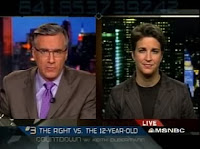
Having first been a contributor and guest-host on Countdown, former gay rights (ACT UP!) activist Rachel Maddow recently began hosting her own show following Olbermann; The Rachel Maddow Show has become one of MSNBC’s top-rated programs while Maddow continues hosting her daily show on Air America Radio, a nationally syndicated liberal and progressive “talk-radio” network launched in 2004 as a potential antidote to the popularity of conservative voices like that of Rush Limbaugh. Both Olbermann and Maddow are openly supportive of Obama while also being critical of his more conservative tendencies. MSNBC is earning a reputation as the diametric opposite of FOX News—owned by Rupert Murcdoch’s News Corporation—which functions essentially as a rightwing propaganda outlet and makes very little effort to disguise its ideological bent. Other significant elements of this left-leaning media constellation include news/commentary websites such as The Huffington Post.com, Common Dreams.org, and TruthOut.org.

Perhaps the most interesting development of all within this context has been the large national and international popularity of the Comedy Central Network’s “fake news” programs, The Daily Show with John Stewart (1999-present) and The Colbert Report (2005-Present). Appealing initially to younger audiences who took no interest in the stale format of television news, John Stewart and Stephen Colbert’s programs have helped re-shape the commercial media landscape by offering brilliant and often hilarious political/social satire that has been devastatingly critical of Bush and Cheney while providing real news analysis embedded within the framework of satirical comedy sketches. Stewart delivers an openly left-leaning nightly “fake news” cast that parodies cable news programs by making fun of how they sensationally cover events of the day. The latter third segment of The Daily Show consists of guest interviews often featuring political leaders, for instance former Pakistani President Pervez Musharraf appeared with Stewart in September 2006, and Barack Obama made his forth overall appearance (this one by satellite) on the Thursday prior to his being elected President. Stephen Colbert spun his program off from his role as a correspondent on The Daily Show, and very effectively plays an ultraconservative FOX News-like television host who refers to FOX's Bill O’Reilly as “papa bear.” Although it can easily be overstated, one should not underestimate the influence of Stewart and Colbert in terms of connecting with and informing young people while contributing to the foundation of a newly awakened progressive political culture with media icons ranging from Amy Goodman to Rachel Maddow.

Barack Obama’s rapid ascendancy is in many ways connected to this conjuncture; his public opposition to the invasion of Iraq in 2002—while still a state senator—propelled him to victory in the Democratic primary over Hillary Clinton, who had been the odds-on favorite to win the nomination but whose vote to authorize funding for the war made her highly vulnerable. At the same time, while eventually gaining strong support from the corporate/financial sector, Obama’s campaign first developed along the lines of the Dean model and was able to build an unprecedented grassroots mobilization that capitalized on the Illinois Senator’s personal charisma and political savvy. As the campaign progressed, the idea of President Barack Hussein Obama became a powerful national and international symbol for generational, racial, and political transformation. In this manner, the global social movement that arose in support of Obama drew rhetorical strength from articulating this moment in history as an opportunity to reengage the fulfillment of Martin Luther King’s “Dream,” which in its broadest sense is a vision of a world free from racism, militarism, and poverty.

If this is a highly sympathetic and perhaps exaggerated portrayal of the nascent possibility presented by an “Obama Revolution,” it is presented in order to do justice to the tremendous significance of what occurred on November 4, 2008. Voters in the United States did not just elect the first African- American president, although the image of the Obama family on stage in Grant Park and their imminent arrival in the White House is surely historic. But there was a much larger, indeed a global victory against the forces of reactionary hatred being celebrated by weeping students at Spellman College in Atlanta and jubilant crowds in Harlem; a throng of hope-filled revelers surrounding the White House and spilling into city streets across the country. In Kenya (where a national holiday was declared), Indonesia, Japan, throughout Europe, both Israel and Palestine: the world celebrated hope having triumphed over fear.

There are, of course, serious questions about how far to the left of center Obama’s administration and the Democratic Congress will venture. John Podesta now leads the Obama transition team, and has helped install another former Clinton-insider as the new White House chief of staff, Rahm Emanuel, who is reviled by many progressives for his hawkish stance on Middle-East issues. These developments do not bode well for an immediate and decisive break with the status-quo, but neither do they preclude the development of a center/left coalition in alliance with supportive elements within the Obama orbit. It will obviously be essential to maintain a parallel track of organizing from outside the system, and in this sense there are already a number of arenas in which the left should begin articulating an oppositional stance to the new administration, the war in Afghanistan for instance. With Emanuel now in-place one might also imagine that Israel-Palestine policy could soon become a contentious issue. In fact, Emanuel’s selection may represent how the centrist Democratic Leadership Committee (DLC) associated with the Clintons is attempting to assert control over Obama’s agenda, which might otherwise lean in a more progressive direction closer to Dean’s wing of the party.

Nonetheless, the Obama campaign as a social movement has reopened space for public participation and progressive agitation. At the same time, the current financial meltdown has ignited the possibility of organizing a reformist coalition around the goal of pressuring for an FDR-like “Green New Deal” whereby current economic and environmental crises can be addressed through a strategically designed green jobs, infrastructure, and social services program that would aim to slowly dismantle the national security state by diverting resources to an ascendant environmental/welfare state. There is no guarantee that such a movement could be successfully built and/or maintained in the coming months and years—indeed, there is much reason to believe that Obama will be a disappointment to the left on several fronts, from trade and corporate taxes to military spending. And yet, the new President-elect set the stage rhetorically for what may be possible in the days ahead: “this victory alone is not the change we seek — it is only the chance for us to make that change. And that cannot happen if we go back to the way things were. It cannot happen without you.”

Wednesday, November 5, 2008

FROM FEAR...TO HOPE!

November 4 2008, Chicago
President-elect Obama:

"It's been a long time coming, but tonight, because of what we did on this day, in this election, at this defining moment, change has come to America...

The road ahead will be long. Our climb will be steep. We may not get there in one year, or even one term, but America — I have never been more hopeful than I am tonight that we will get there. I promise you: We as a people will get there...

This victory alone is not the change we seek — it is only the chance for us to make that change. And that cannot happen if we go back to the way things were. It cannot happen without you...

This is our moment. This is our time — to put our people back to work and open doors of opportunity for our kids; to restore prosperity and promote the cause of peace; to reclaim the American Dream and reaffirm that fundamental truth that out of many, we are one; that while we breathe, we hope, and where we are met with cynicism, and doubt, and those who tell us that we can't, we will respond with that timeless creed that sums up the spirit of a people: Yes, we can."